
First Rank delivers app development for chiropractors in Sydney, combining care-schedule architecture, patient-facing features, and local search signals to generate qualified bookings. We build assets you own outright, tracked against the calls and patient enquiries they produce each month.
Located at 17 Lambretta Street
Hillcrest QLD 4118 Australia
We're here to help you grow
Located at 17 Lambretta Street
Hillcrest QLD 4118 Australia
We're here to help you grow
Sydney chiropractic practices face a specific challenge: patients search with high local intent, compare providers across Parramatta, Chatswood, and Bondi, and book with whoever shows up first with a frictionless experience. First Rank works with Sydney businesses to close that gap. We build app development assets that connect directly to patient behaviour, track performance against real bookings, and give you something you own and can measure every single month.

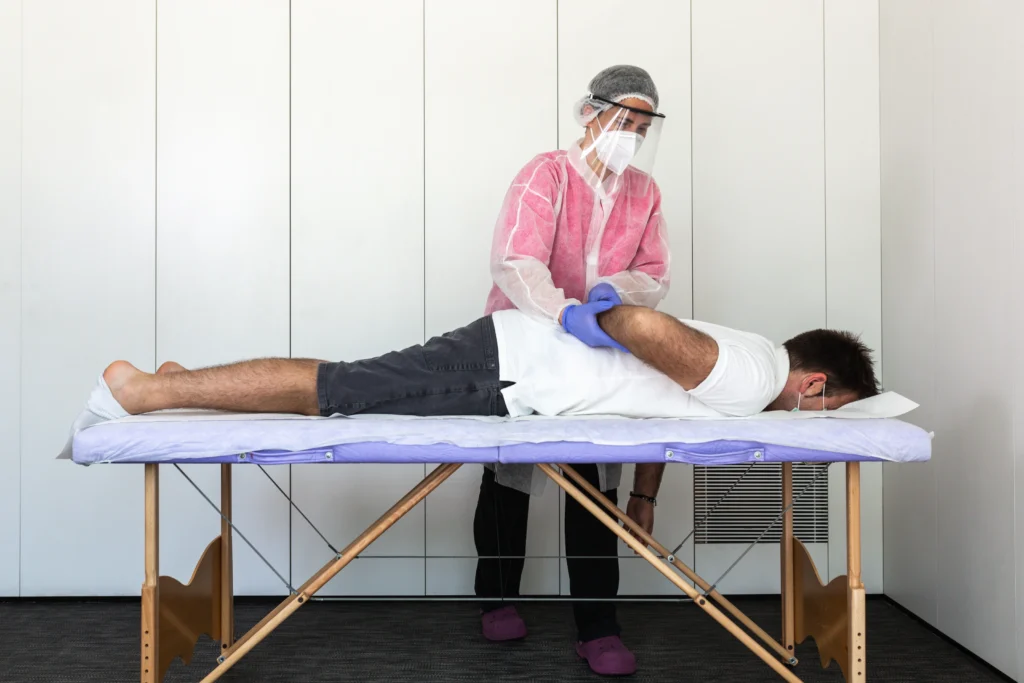
Generic app development ignores how chiropractic patients actually search and book. A one-size-fits-all approach misses the treatment-specific intent that drives calls in Sydney, and it fails to account for the care-schedule complexity that distinguishes chiropractic from general health services. One concrete failure mode: generic developers build a basic appointment form and call it done, leaving no mechanism to re-engage lapsed patients on maintenance plans.
We start by auditing your current digital footprint against the specific queries Sydney chiropractic patients type when they're ready to book. That means reviewing your Google Business Profile category accuracy for chiropractic-specific searches across Sydney suburbs, checking whether your existing web presence captures treatment-specific intent (spinal adjustment, sports chiropractic, maintenance care), and mapping the gap between where you currently rank and where your patients are actually searching. We document every technical barrier, every missing local signal, and every page that should be converting but isn't. You get a clear picture of what's costing you enquiries before we build a single line of code. Nothing moves forward without this baseline, because building an app on a weak diagnostic foundation wastes your budget and produces results you can't attribute.
This is where the app is built and the local search signals are set. We develop patient-facing features specific to the chiropractic workflow: care-schedule tracking, appointment milestone visibility, clinician progress notes, and in-app booking integrated with your existing practice management system. Every feature is mapped to a patient behaviour we identified in the diagnostics sprint. We don't build generic health app templates and rebadge them for chiropractic. We build around the multi-session treatment journey, which means patients can see where they are in their plan, receive automated prompts when they're overdue, and book their next session without calling reception. Optimisation runs in parallel: we test load speed, booking flow completion rates, and re-engagement message timing to sharpen results from week one.
Every month you receive a report that ties app activity directly to patient enquiries and bookings, not vanity metrics. We track care-schedule adherence rates, lapsed-patient reactivation volumes, in-app booking completions, and suburb-level engagement across Sydney. If a re-engagement sequence isn't converting, we revise the message timing or trigger logic. If a particular suburb is generating strong search traffic but weak in-app conversions, we investigate the friction point and fix it. The growth loop is continuous: data from each reporting cycle feeds the next optimisation block. You always know exactly which features are producing bookings and which ones need work. That transparency is non-negotiable at First Rank, because you're paying for results you can see and attribute, not activity reports full of numbers that don't connect to revenue.
The fourth step is where industry fit becomes a permanent operating advantage. We move from the initial build into a structured programme of chiropractic-specific feature development: expanding treatment-category coverage, adding condition-specific educational content triggered by clinician progress notes, and building suburb-level landing experiences within the app that match the way Sydney patients search. Non-obvious value shows up here when the app's features match the exact queries and care moments that create enquiries in Sydney. A patient on a maintenance plan who receives a timely, relevant re-engagement message is far more likely to rebook than one who receives a generic reminder. This step ensures your app continues to reflect the actual patient journey at your Sydney clinic, not a templated version of what a chiropractic app is supposed to look like.
First Rank is an Australian IT and Digital Agency based at 17 Lambretta Street, Hillcrest QLD 4118 Australia. Every chiropractic app development engagement in Sydney sits within a structured delivery system built around measurable patient and business outcomes: bookings generated, lapsed patients reactivated, and reception load reduced. Explore our Sydney App Development services →
Our Sydney team provides clear reporting on what's been done, what's next, and how each action connects to bookings and enquiries. You'll always understand the value of your app development investment.

Problem: A Sydney chiropractic clinic focused on long-term wellness care was losing touch with patients between appointments. Patients on maintenance schedules were lapsing between visits and the clinic had no automated way to re-engage them.
Action: Developed a patient retention app with care schedule tracking, automated lapse detection and re-engagement messaging, and integrated in-app booking.
Outcome: First Rank built a patient retention app that tracked each patient’s care schedule, sent automated re-engagement messages when a patient was overdue, and allowed in-app booking. Lapsed patient reactivations increased in the 3 months following launch. The practice had no automated re-engagement mechanism before this project. Building one directly into a patient-facing app, tied to each individual’s care schedule, meant the clinic could act on lapsing behaviour as it happened rather than after the patient had already disengaged entirely.
Problem: A Sydney chiropractic practice had no patient-facing treatment progress tracker. Patients on multi-session treatment plans frequently asked at reception whether their treatment was on track, and clinicians found that patients who did not understand their progress were more likely to disengage from the plan before completing the recommended course of treatment.
Action: First Rank built a patient treatment progress app showing the current stage of the treatment plan, upcoming appointment milestones, progress notes added by the clinician after each session, and educational content relevant to the patient’s condition. Clinicians updated progress notes within their existing clinical workflow.
Outcome: Patient questions about treatment progress at reception dropped by an estimated 50% in the first quarter. Clinicians reported improved patient engagement with treatment plans in 65% of cases where the app was used, and the practice principal noted a measurable reduction in mid-plan disengagement in the 6 months following launch.
Chiropractic app development in Sydney doesn't have a flat rate; it depends on the features you need. A straightforward patient booking app with push notifications sits at a different price point than a full care-schedule tracker with automated re-engagement messaging. Most Sydney chiropractic practices we talk to want to know if they'll see a return before committing. That's a fair question. The scope drives the cost, so the most useful thing you can do is map out your must-have features first: booking, progress tracking, patient communication, or all three. Reach out for a tailored quote based on what your clinic actually needs, rather than a generic ballpark that won't reflect your real build.
A proper chiropractic app build involves a lot more than a booking button. It includes defining the patient journey, building care-schedule logic, integrating your existing practice management workflow, and setting up automated touchpoints that fire when a patient goes overdue. On the technical side, it covers iOS and Android builds, backend infrastructure, and post-launch support. The operational layer is where most generic app services fall short: they don't account for chiropractic-specific workflows like multi-session treatment plans, maintenance schedule tracking, or clinician progress note updates. Sydney practices also operate under Australian Privacy Act obligations, so data handling and patient record privacy aren't optional considerations; they need to be built in from the start.
Specialised chiropractic app development differs from generic development because it's built around how patients move through a chiropractic care plan, not just how they book a single appointment. A generic app developer might give you a calendar widget. A specialist builds lapse detection, treatment milestone tracking, and in-app education content that's relevant to the patient's specific condition. The difference shows up in patient retention numbers. Generic apps don't account for the fact that chiropractic patients on maintenance schedules disengage gradually; there's no single cancellation event to flag. Specialised development anticipates that drop-off pattern and builds re-engagement triggers before the patient fully lapses. That's the gap between an app that gets downloaded and an app that actually keeps your Sydney clinic's patient list active.
Most chiropractic app projects run around four months from brief to launch, depending on feature scope and how quickly your team can review and approve builds at each milestone. A stripped-back MVP with booking and push notifications can move faster; a full patient retention and progress-tracking system with clinician workflow integration takes longer. Don't expect two weeks; apps that are built that fast tend to skip the testing and clinical workflow mapping that makes them actually useful in a chiropractic setting. The projects in our case studies ran on a four-month timeline and included care-schedule tracking, automated messaging, and in-app booking. That's a realistic benchmark for a well-scoped chiropractic app build in Sydney.
Yes, local context matters more than most app developers acknowledge. Sydney chiropractic patients search suburb-specifically: someone in Parramatta or Chatswood isn't comparing clinics city-wide; they're looking for the closest practice that serves their area. An app that reflects your clinic's Sydney suburb, links to your local Google Business Profile, and uses location-aware push notifications (for patients who've lapsed and live nearby) performs better than a generic app with no geographic logic. Suburb-level targeting in your app's re-engagement messaging also reinforces the local signals that help your clinic rank for area-specific searches. It's a small configuration detail that pays off in both patient reactivation rates and local search visibility.
Your Sydney chiropractic clinic competes on patient retention as much as new bookings. An app built around your care workflow keeps patients engaged between sessions, reduces lapsed appointments, and gives you the local digital presence to attract new patients searching in Parramatta, Chatswood, Bondi, and beyond.
Get My Free Strategy Session
Free to start.