
First Rank delivers app development for builders in Melbourne that connects local search intent with real enquiries and site bookings. We build around suburb-level service pages and conversion tracking so every ranking shift ties back to calls and client bookings you can measure.
Located at 17 Lambretta Street
Hillcrest QLD 4118 Australia
We're here to help you grow
Located at 17 Lambretta Street
Hillcrest QLD 4118 Australia
We're here to help you grow
Melbourne's building industry runs on reputation and timing. Clients searching for builders in Footscray, Dandenong, or Frankston want to find you quickly, confirm your credibility, and make contact without friction. First Rank works with local businesses to make that path as short as possible.
We've helped Australian businesses across trades, retail, and services move from invisible to in-demand through practical digital work grounded in measurable outcomes. Our work in app development for builders focuses on the queries that produce calls and bookings, not traffic numbers that don't pay the bills.

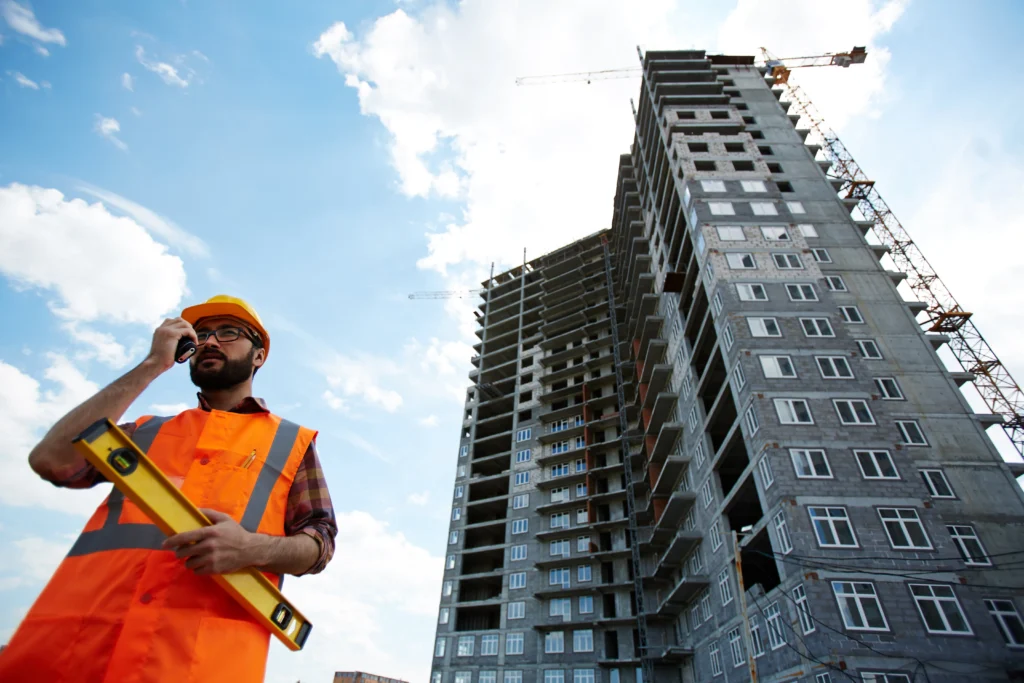
Generic app development ignores the way Melbourne builders actually win work. A builder serving Dandenong, Frankston, and the inner south-east needs an app built around how clients in those suburbs search, enquire, and communicate during an active build. When developers treat a Melbourne building company the same as any other small business, the result is an app that nobody uses and a client-communication problem that never gets solved.
Before any code is written, we map exactly where your current client communication and site coordination are breaking down. For Melbourne builders, that means reviewing your inbound call volume by category, how many of those calls are status-update requests rather than new-business enquiries, and what your site managers are spending time on each day. We document your active subcontractor count per project, your current scheduling method (phone, email, WhatsApp, or a combination), and the average number of scheduling conflicts per project cycle. We set baseline KPIs against these operational metrics: client status calls per week, site manager hours spent on administrative tasks, subcontractor schedule conflicts per project, and post-completion client satisfaction scores. Every KPI we track at this stage maps directly to a business outcome you can see on a profit and loss statement, not a vanity metric on a dashboard nobody reads.
With baselines confirmed, we design and build the app components that address each identified failure point. For a Melbourne residential builder dealing with high client call volume, that means a client-facing progress portal with real-time build-stage visibility, photo logs updated by supervisors at each stage completion, and automated milestone notifications that go to clients before they pick up the phone. For a commercial builder managing 15 to 20 subcontractors per project, it means a shared project timeline, document access by trade, and automated conflict alerts that surface scheduling problems before they become on-site disputes. We build to your workflow, not a template. Integration points with your existing project management tools are scoped during this phase, and every user-facing notification is tested against how your Melbourne clients actually communicate: mobile-first, short-form, and time-sensitive.
Shipping the app is not the finish line. We instrument every key action so you can see, week by week, whether the metrics from the audit phase are moving. Client status calls are tracked against pre-launch baseline. Site manager hours spent on administrative tasks are self-reported against the baseline figure at monthly check-ins. Subcontractor schedule conflicts are logged inside the app and compared against historical averages. We produce a plain-English monthly report tied to these operational KPIs, not a technical report full of server metrics that do not connect to your bottom line. When one module is performing, we use that data to justify scaling: adding new subcontractor onboarding flows, expanding the client portal to additional project types, or building a public-facing service-area tool for your Melbourne website that converts prospects before they even call.
Melbourne's construction market has specific dynamics that generic app developers do not account for. The city's building boom across inner-ring suburbs and outer growth corridors like Dandenong means builders are simultaneously managing longer project queues and higher client-communication expectations. Melbourne's domestic building framework also creates mandatory inspection and approval touchpoints that generate predictable client anxiety if not communicated proactively. Our app development for builders in Melbourne is scoped around these realities: automated notifications at Victorian Building Authority inspection stages, suburb-specific service-area logic, and project timelines calibrated to Melbourne's seasonal construction patterns. The result is an app that fits how Melbourne builders actually run jobs, not how a generic developer imagines a construction business operates.
First Rank is an Australian IT and Digital Agency based at 17 Lambretta Street, Hillcrest QLD 4118 Australia. Our work with Melbourne builders sits inside a structured service architecture that connects industry-specific app development to our core Melbourne App Development team →, which means your project benefits from both specialist builder knowledge and the broader technical depth of our full development capability.
Our Melbourne team provides clear reporting on what's been done, what's next, and how each action connects to bookings and enquiries. You'll always understand the value of your app development investment.

Problem: A Melbourne residential building company was receiving an average of 15 to 20 phone calls per week from clients asking for construction progress updates. Site managers were spending an estimated 2 hours per day fielding status calls instead of managing work on site. Several clients had complained that they felt uninformed about progress on their builds, despite the project manager providing regular verbal updates.
Action: First Rank built a client-facing construction progress app that gave homeowners a real-time view of their build stage, upcoming milestones, and a photo log updated by site supervisors at each stage completion. Automated notifications went to clients when stages were completed, inspections were booked, or approvals were required. Clients could message the project manager directly through the app with a 24-hour response commitment.
Outcome: Client status calls to the office dropped by an estimated 70% within the first two months of launch. Client satisfaction scores on the post-completion survey improved to their highest recorded level. The site managers reported reclaiming an estimated 8 hours per week previously spent on status-update phone calls.
Problem: A Melbourne commercial builder was coordinating 15 to 20 subcontractors per project through a combination of phone, email, and WhatsApp group messages. Subcontractors frequently arrived on site when other trades were still occupying the space they needed, creating delays and disputes over responsibility. The project manager estimated that poor subcontractor coordination added an average of 2 to 3 weeks to each project timeline.
Action: First Rank built a subcontractor coordination app with a shared project timeline where each trade could see their scheduled windows, access site documentation, and log progress. Automated notifications flagged schedule conflicts before they became on-site issues. The project manager could adjust the schedule centrally and push updates to all affected subcontractors simultaneously.
Outcome: Subcontractor scheduling conflicts dropped by an estimated 80% across the first three projects managed through the app. Average project timeline improvement was estimated at 2 weeks per project. One major commercial project completed 18 days ahead of the contractual deadline, which triggered an early-completion bonus.
Builder app development in Melbourne generally ranges from a few thousand dollars for a simple client-facing tool to well above $50,000 for a full subcontractor coordination platform with integrations. The honest answer is that cost depends entirely on scope.
A basic progress-update app with photo logging and automated notifications sits at the lower end of that range. Add a scheduling engine, document management, and real-time messaging, and the budget climbs quickly. Most Melbourne builders we speak to underestimate the scope they actually need, then find themselves paying for additional features six months after launch.
The variables that move the number most are the number of user types (homeowner, site manager, subcontractor), the depth of integration with existing project management tools, and whether you need iOS, Android, or both. Get a scoped estimate before you commit to anything.
It involves translating the operational chaos of a building site into a structured digital workflow your clients and trades can actually use. That's not a simple build.
The process covers discovery and scope mapping, UI design specific to trade and homeowner personas, backend development for notifications and data storage, testing across real devices and connection conditions, and post-launch support. For Melbourne builders, that often means accounting for multi-stage residential projects with council inspection milestones baked into the notification logic.
Don't expect a cookie-cutter template to cover it. A good development engagement starts with your workflow, not a pre-built feature list. The app should reflect how your site managers actually run a project, not how a software vendor assumes they do.
Generic app development services build to a brief. Specialist builders app development starts by understanding why site managers spend two hours a day on the phone and what that's costing you in lost site time.
The difference shows up in the details: trade-specific notification logic, construction-stage milestone triggers, photo documentation structured around inspection checkpoints, and permission layers that give subcontractors access to only what they need. A generic developer builds features. A specialist builds workflows.
For Melbourne builders, that distinction matters more than it might in other industries. Construction projects here run across multiple council jurisdictions, involve complex trade sequencing, and carry real financial penalties for delays. An app built without that operational context is likely to get ignored on site within a month of launch.
A scoped, purpose-built construction app typically takes four to six months from discovery to launch, depending on complexity. That timeline covers the discovery phase, design, development, testing, and handover.
Simpler client-facing apps with a defined feature set can move faster. Subcontractor coordination platforms with scheduling engines and integration requirements take longer. The variable that kills timelines most often is scope creep during the build, which is why a clear discovery phase before development starts is non-negotiable.
For Melbourne building companies, factor in time for internal training and a soft-launch period where site managers and subcontractors are onboarded before the app becomes the primary communication channel. Rushing that handover is where a lot of otherwise solid apps fail in practice.
Yes, particularly if your business operates across multiple Melbourne suburbs or council zones. A single generic app with no local context can leave gaps in how inspections, approvals, and subcontractor rosters are managed across different project locations.
Footscray, Dandenong, and Frankston all sit within different council jurisdictions, and the inspection and approval workflows your app needs to support can differ meaningfully between them. An app built without that local operational logic forces your site managers to work around it rather than through it.
Beyond compliance logic, suburb-level awareness also matters for client communication. Homeowners in different parts of Melbourne have different expectations about response times and update frequency. The app experience should reflect that, not flatten it with a one-size approach that works adequately everywhere but well nowhere.
Melbourne's construction market moves fast. Builders who get their operational systems in order now are the ones booking better clients and running more profitable projects in twelve months' time. If you're ready to stop losing site hours to status calls and scheduling disputes, let's build something that actually fixes it.
Book Your Free App Development Review in Melbourne.
Zero obligation.