
First Rank delivers app development for physiotherapists in Melbourne, building tools that map to suburb-level patient intent, drive bookings, and track compliance between sessions. Our.
Located at 17 Lambretta Street
Hillcrest QLD 4118 Australia
We're here to help you grow
Located at 17 Lambretta Street
Hillcrest QLD 4118 Australia
We're here to help you grow
Melbourne physiotherapists operate in a market where patients search by suburb, treatment type, and availability before they ever pick up the phone. First Rank has worked with local businesses across Melbourne, Footscray, Dandenong, and Frankston to close the gap between digital presence and booked appointments.
We build app development services around what your patients actually do: search locally, compare providers, and book on mobile. Our work is grounded in measurable outcomes, not activity reports. If it doesn't produce enquiries or bookings you can track, we don't consider it a result.


Generic app development ignores one critical failure mode that hits Melbourne physiotherapy clinics hard: exercise and patient management apps built without treatment-specific workflows force clinicians to adapt their practice to the tool, rather than the tool adapting to the clinic. The result is low adoption, poor patient compliance, and no usable data between sessions.
Before any app development begins, we audit your current patient journey from first search to booked appointment. For Melbourne physiotherapy clinics, this means reviewing your Google Business Profile category accuracy against suburb-specific search intent, mapping which treatment types patients are searching for across areas like Frankston and Dandenong, and identifying where patients are dropping off before they book. We look at your existing digital tools: does your website support mobile booking? Are your service pages structured around the searches that produce appointments, or are they written for search engines alone? We document every gap in the patient-facing experience that a purpose-built app could close, and we define the compliance, booking, and communication metrics we'll track from day one. Nothing gets built until we know exactly what problem we're solving and how we'll measure whether we've solved it.
This is where the app gets built to the diagnostic brief, not to a generic template. For physiotherapy clinics in Melbourne, that means configuring treatment-specific exercise libraries with video cues, sets, and reps that clinicians can assign in under two minutes per patient. It means building push notification sequences timed to each patient's program schedule, not a generic daily reminder at 9am. We build suburb-aware intake and booking flows so that a patient in Footscray sees the services and clinicians available at that location, not a citywide menu that creates confusion. Every feature is tested against real clinical workflows before release. After go-live, we monitor app engagement, notification open rates, and booking conversion weekly, and we make adjustments based on what the data shows rather than what we assumed during planning.
Most Melbourne physiotherapists we speak to have tried at least one digital tool that produced no visible connection to their bookings or revenue. Our reporting loop is built to prevent that. We tie app engagement metrics directly to the clinical and business outcomes that matter: home exercise compliance rates, average sessions to discharge, new patient enquiries attributed to the app, and sports club or insurer contract activity driven by injury reporting features. Each reporting cycle identifies the next highest-impact improvement: a new treatment pathway to add to the exercise library, a notification sequence to adjust, or a suburb-specific booking page to build out. The loop doesn't stop after launch. Melbourne's physiotherapy market shifts across seasons, particularly around football and basketball club cycles in areas like Dandenong, and your app's performance reporting should reflect that.
Physiotherapists in Melbourne need app development that reflects how their patients search, book, and recover, not a generic health app framework repurposed from another industry. Most Melbourne physiotherapy businesses stall when app development tactics ignore how locals search and shortlist providers. That's the non-obvious problem: an app that works well clinically but doesn't connect to your suburb-level digital presence won't drive new bookings, only serve existing ones. In this step, we match the app's patient-facing features with your broader local search presence, ensuring that the app supports rather than sits apart from how patients in Footscray, Frankston, or Dandenong discover and choose your clinic. Service pages, Google Business Profile signals, and in-app booking flows are built as a connected system, not separate projects.
First Rank is an Australian IT and Digital Agency based at 17 Lambretta Street, Hillcrest QLD 4118 Australia. The physiotherapy app development work you see on this page is delivered through our core Melbourne App Development team →, which handles scoping, build, and ongoing optimisation for local health and clinical businesses.
Our Melbourne team provides clear reporting on what's been done, what's next, and how each action connects to bookings and enquiries. You'll always understand the value of your app development investment.
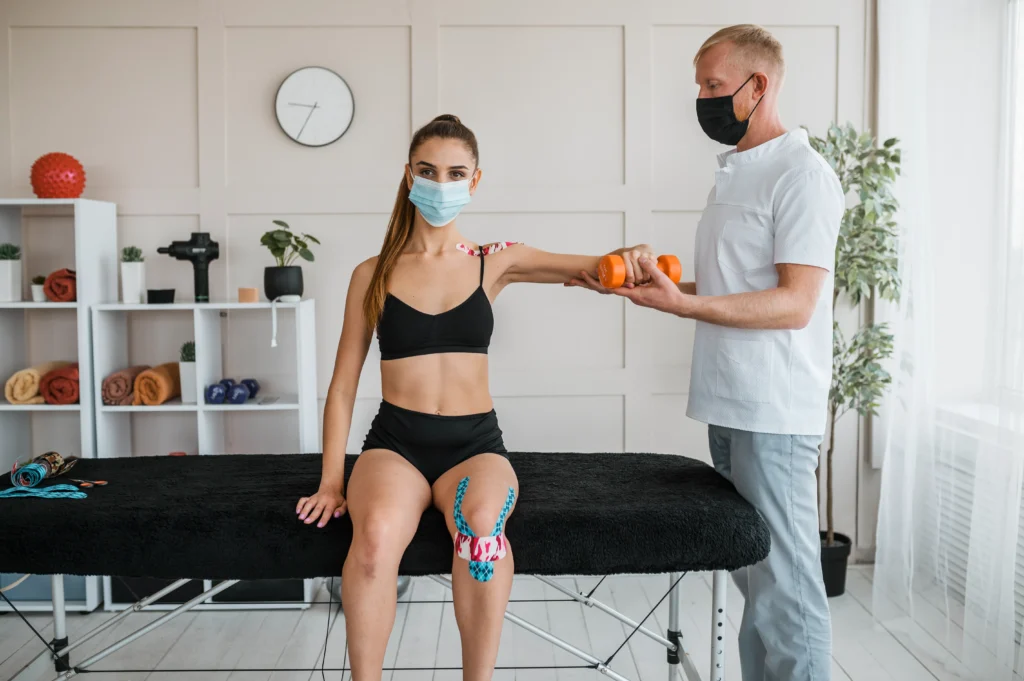
Problem: A physiotherapy clinic in Melbourne had a consistent problem with patients not completing prescribed home exercise programs between sessions. Clinicians were delivering exercise sheets on paper, which patients frequently lost or did not refer to. An estimated 50% of patients reported at their next session that they had not completed their exercises, which was slowing recovery times and reducing the number of sessions patients could discharge from.
Action: First Rank built a home exercise app where clinicians could assign personalised exercise programs from a video library, with sets, reps, and technique cues. Patients received daily push reminders and logged completions in the app. Clinicians could review compliance data before each session and adjust programs remotely without requiring a visit.
Outcome: Self-reported home exercise compliance improved by an estimated 55% within the first quarter. Average number of sessions to discharge for standard musculoskeletal presentations dropped by an estimated 1.5 sessions. Patient satisfaction with the home exercise component of care increased in post-treatment surveys.
Problem: A sports physiotherapy clinic in Melbourne servicing local football and basketball clubs had no structured way to track athlete injury data across a season. Each treating clinician maintained their own notes in different formats, making it difficult to identify patterns in recurring injuries or communicate rehabilitation progress to coaches and team management.
Action: First Rank built a sports injury management app that allowed clinicians to log assessments using standardised templates, track rehabilitation milestones, and generate automated progress reports for coaches. The app flagged athletes approaching return-to-play criteria and highlighted recurring injury patterns at the club and position level.
Outcome: The clinic secured contracts with 3 additional local sports clubs within six months of launching the app, citing the injury data reporting as the key differentiator. Recurring soft tissue injury rates among tracked athletes dropped by an estimated 30% over one season. Coach satisfaction with injury communication was rated highly in post-season reviews.
App development for physiotherapists in Melbourne typically ranges from a few thousand dollars for a simple patient-facing tool to significantly more for a fully featured clinical platform with bookings, exercise libraries, and compliance dashboards. Costs vary based on the number of integrations you need: practice management software, telehealth, push notifications, and custom reporting all add scope. Most Melbourne physio clinics we talk to are surprised by how much the ongoing maintenance and hosting layer adds to the total investment. A basic home exercise app looks very different in budget terms to a multi-clinician injury tracking platform. We don't publish a fixed price here because the scope drives the number. Reach out and we'll give you a clear picture based on what you actually need.
It involves translating the clinical workflows your team already uses into a digital product patients and clinicians can operate without friction. That means mapping how your practitioners assign exercises, track compliance, and communicate with patients, then building those flows into a structured app. For Melbourne physio clinics, it typically covers a video exercise library, push reminder logic, session logging, and a clinician dashboard. On the backend, we handle the architecture so patient data is handled appropriately and the app performs reliably across Android and iOS. It's not just building screens. It's understanding how a physio actually uses their time between sessions and making the app fit that, not the other way around.
Generic app development produces a functional product. Specialised physiotherapy app development produces a tool that fits clinical workflows, patient compliance patterns, and the specific way Melbourne physio practices operate. A generic developer builds what you describe. A specialist asks why patients aren't completing their home programs and designs the notification logic, exercise sequencing, and compliance reporting around that problem. The difference shows up in patient outcomes and in whether your clinicians actually use the app after month three. Generic builds often miss the clinical detail that makes the product sticky. We design around how physiotherapists work, not around a template.
A focused physiotherapy app with core features typically takes three to six months from scoping to launch, depending on complexity. A home exercise compliance tool sits toward the shorter end. A multi-clinic injury tracking platform with coach-facing reporting and season analytics sits toward the longer end. Melbourne clinics working with us go through a discovery sprint first, which tightens the build timeline by surfacing scope issues before development starts. Rushed timelines usually create problems in the testing phase, and clinical apps need thorough testing before patients interact with them. We'll give you a realistic delivery window during the initial scoping conversation, not a number pulled from thin air.
You don't strictly need a local team, but working with developers who understand how Melbourne physio clinics operate makes a measurable difference. Local context matters when you're designing for suburb-level patient populations, integrating with Australian practice management software, and building a product that meets local healthcare data handling expectations. A development team with no healthcare experience will build you an app. A team that understands the clinical environment will build you an app your practitioners trust. For Melbourne clinics specifically, the market is competitive enough that a generic patient app won't stand out. Industry-specific development services tailored to physiotherapy workflows are what produce results clinicians and patients actually adopt.
Your Melbourne physio practice runs on patient trust and clinical outcomes. The right app development brings those two things together in a product your team will use and your patients will stick with. We build app development services designed specifically for physiotherapists, not generic tools dressed up with clinical branding. Take the next step and get a clear picture of what's possible for your practice. Request Your Free Melbourne Rankings Report today.
No lock-in.