
First Rank delivers app development for physiotherapists in Sydney, building practice-specific tools that surface on local search and convert suburb-level intent into real bookings. Most Sydney physiotherapy practices target the wrong keywords. We map suburb-level intent, build service-specific pages, and track results at the enquiry level.
Located at 17 Lambretta Street
Hillcrest QLD 4118 Australia
We're here to help you grow
Located at 17 Lambretta Street
Hillcrest QLD 4118 Australia
We're here to help you grow
Sydney businesses trust First Rank to build digital assets that actually drive enquiries. We’ve worked with local operators across a wide range of industries, from retail and hospitality to health and clinical services. Our work is grounded in measurable outcomes: more bookings, more calls, more walk-ins.
We don’t chase vanity metrics. We build app development services that connect your practice with the patients searching for physiotherapy in Sydney right now, whether they’re in Parramatta, Chatswood, Bondi, or down the street from your clinic.
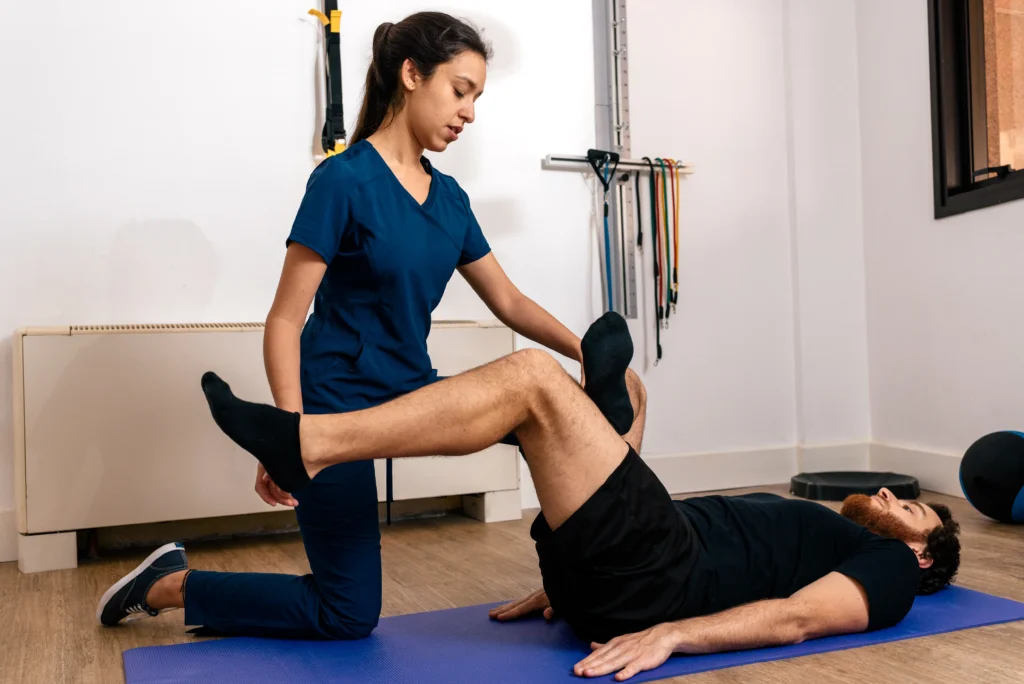
Generic app developers treat a physiotherapy practice like any other booking business. That’s the problem. They build cookie-cutter solutions with no understanding of how Sydney patients search for treatment-specific care, no knowledge of how suburb-level intent drives appointment bookings, and no appreciation for the compliance requirements that apply to health app data in Australia. One common failure mode: a generic app developer builds a single booking screen with no waitlist logic, meaning every same-day cancellation becomes lost revenue that reception staff scramble to fill by phone.
We start by auditing your current digital presence against the specific search behaviour of Sydney physiotherapy patients. That means reviewing your Google Business Profile category accuracy for physio-specific searches, assessing your existing booking flow for drop-off points, and identifying which treatment-type keywords you're missing at the suburb level. We establish baseline KPIs before any build begins: current appointment fill rate, same-day cancellation recovery rate, and the volume of inbound enquiries arriving through digital channels. This gives us a documented starting point so every improvement we make is measurable. We don't guess at what's broken. We show you exactly where you're losing bookings before we build a single screen.
Once the audit is complete, we build and deploy your physiotherapy app with the features that directly address the gaps we found. For Sydney practices, that typically means a treatment-specific booking interface that separates sports physiotherapy, post-surgical rehabilitation, and chronic pain management into distinct patient flows. We integrate an automated waitlist module so same-day cancellations are immediately offered to the next available patient via push notification, eliminating the manual phone calls that cost reception staff time and leave slots empty. We also connect your app to your Google Business Profile and any suburb-specific service pages, creating a joined-up system where search intent flows directly into confirmed bookings without friction.
Every booking, cancellation recovery, and telehealth consultation completed through the app is tracked in a live dashboard accessible to your practice principal and front desk. We set up attribution at the enquiry level, not just installs or page views, so you can see exactly how many appointments the app generated this week compared to last month. Monthly reporting covers appointment fill rate, waitlist conversion rate, and revenue recovered from same-day cancellations. When the data shows a feature is underperforming, we adjust before the next reporting cycle. This is how small technical improvements compound over time into a consistently fuller appointment book, which is the non-obvious reality of winning in the Sydney physiotherapy market.
The final step is ongoing optimisation specific to the Sydney physiotherapy market. Sydney's physio is competitive at the suburb level: a patient in Chatswood searches differently from a patient in Bondi, and your app's discoverability needs to reflect that. We review app store metadata, in-app content, and linked web pages on a quarterly basis to keep your practice visible as search behaviour shifts. We also monitor compliance obligations under Australian health data regulations and update data handling practices when requirements change. This step is what separates a one-off build from a long-term booking asset. Your app keeps working to fill your appointment book without you having to manage it manually.
Every physiotherapy app we build in Sydney connects back to the full capability of our core Sydney App Development team →. That means you’re not working with a specialist-only silo that can’t handle technical depth; you’re accessing a complete development infrastructure with the industry-specific layer applied on top.
Our Sydney team provides clear reporting on what’s been done, what’s next, and how each action connects to bookings and enquiries. You’ll always understand the value of your app development investment.
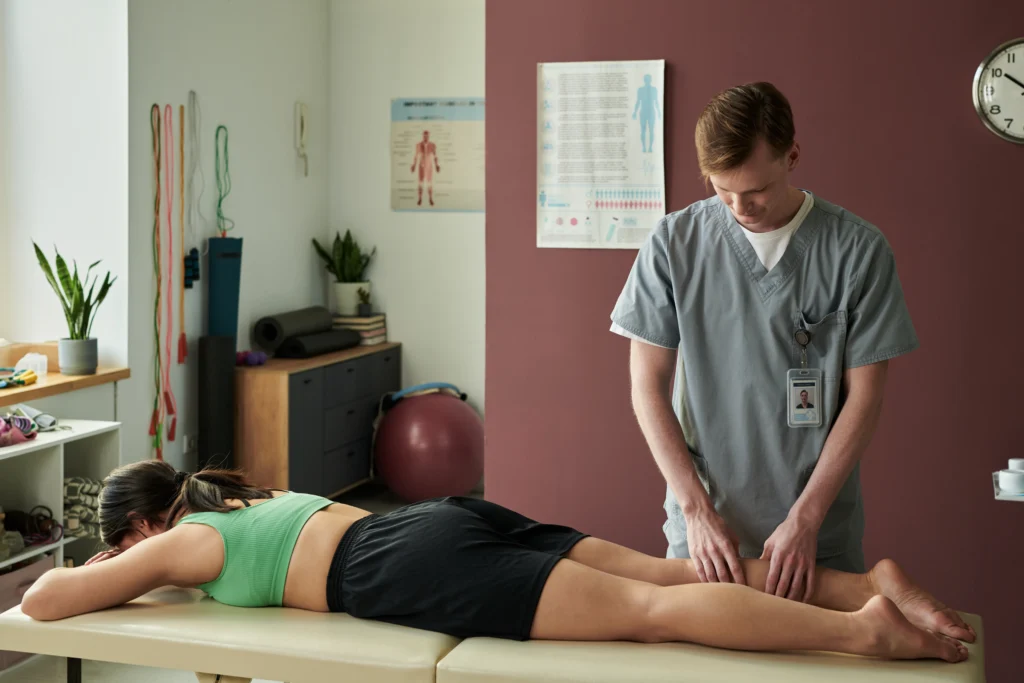
Problem: A Sydney physiotherapy practice was managing short-notice cancellations and waiting list fill by phone. When a same-day appointment was cancelled, reception had to call through a manual waiting list, which was slow and often unsuccessful in filling the slot before the appointment time. Empty appointment slots were a consistent weekly revenue loss.
Action: First Rank built a waitlist app where patients could join a priority list for short-notice appointments, receive instant push notifications when a slot became available, and confirm or decline within 10 minutes before the next patient on the list was notified. Reception received a live dashboard of waitlist positions and automatic booking confirmations.
Outcome: Same-day cancellation fill rate increased from an estimated 20% to 75% within the first quarter. The practice filled an additional 24 appointments per month from the automated cancellation waitlist. Reception time spent on manual waitlist calls was eliminated entirely for same-day cancellations.
Problem: A Sydney physiotherapy practice had no telehealth or virtual consultation option. Patients who could not attend in person due to work commitments, illness, or travel were cancelling rather than converting to a remote appointment. The practice was losing appointment revenue on days when in-person attendance declined due to weather or illness outbreaks.
Action: First Rank integrated a telehealth consultation module into the practice booking app, allowing patients to switch an in-person booking to a video consultation up to 2 hours before the appointment. Clinicians joined via a secure practitioner portal. Clinical notes were completed within the same workflow as in-person sessions.
Outcome: 35 virtual consultations were completed in the first month of the telehealth feature launching. Overall monthly appointment volume increased by an estimated 15% as the practice captured patients who would have previously cancelled. The practice principal noted that three patients who started on telehealth subsequently transitioned to regular in-person consultations.
App development for a Sydney physiotherapy practice typically starts around a few thousand dollars for a focused single-function app and scales significantly for multi-feature platforms. Costs depend on the number of integrations you need, such as online booking, waitlist automation, telehealth, or clinical notes workflows.
A basic patient-facing booking and notification app sits at the lower end. A fully integrated platform covering telehealth video consultations, automated waitlist management, and a practitioner portal sits considerably higher. The honest answer is that pricing varies too much by scope for a single number to be useful here. What drives cost up fastest in the physiotherapy space is clinical workflow complexity and data compliance requirements specific to Australian health records obligations.
Most Sydney physio practices we talk to want to know whether an app will actually pay for itself. The short answer is yes, if it targets a specific revenue leak like unfilled same-day cancellations or patients who cancel rather than converting to telehealth. Reach out to us directly for a scoped quote tied to your actual practice situation.
It involves building patient-facing and clinician-facing digital tools that solve a specific operational problem in your practice. That's the short version.
In practice, it means we start by identifying where your practice is losing appointments or revenue, whether that's manual waitlist management, no telehealth option, or patients disengaging between sessions. From there, we scope the features, build the app architecture, integrate it with your existing booking or practice management system, and test it against real clinical workflows before launch.
For Sydney physiotherapy practices, this often includes push notification systems for cancellation alerts, secure video consultation modules, and live dashboards for reception staff. It's not just a generic app template. Every feature is mapped to a specific outcome your practice needs, and we track that outcome in the first quarter after launch to confirm it's working.
Specialised physiotherapy app development is built around clinical workflows, patient compliance behaviour, and Australian health data requirements. Generic app development is not.
A generic developer builds to a brief. A specialist builds to the way a physio practice actually operates, including the fact that patients often disengage between sessions, that same-day cancellation fill is a consistent revenue problem, and that telehealth needs to fit seamlessly into a clinician's existing notes workflow rather than creating extra steps.
The difference shows up in the details. Generic apps don't account for the 10-minute confirmation window that makes an automated waitlist actually work in a clinical setting. They don't think about how a practitioner portal needs to connect to clinical notes in the same session. And they rarely consider the compliance context that applies to storing patient health information in Australia. Specialised development gets those details right from the start rather than patching them in later.
A focused single-function physiotherapy app, such as an automated waitlist and cancellation fill system, typically takes around three to four months from scoping to live deployment.
That timeline covers discovery, design, build, integration with your booking system, testing with real clinical scenarios, and launch. More complex platforms that include telehealth modules, multi-location support, or deep practice management integrations take longer, generally in the six to nine month range depending on scope.
The Sydney physiotherapy practices we've built for have gone live within a four-month window for contained, well-scoped projects. What stretches timelines is scope creep mid-build and delays in integrating with legacy booking software that doesn't have clean APIs. We scope tightly at the start to keep the build on track. If you've got a specific launch date in mind, contact us early so we can work backwards from it.
Yes, if your practice draws patients from specific Sydney suburbs, your app and its discoverability need to reflect that local context.
Patients searching for physiotherapy near Parramatta, Chatswood, or Bondi are not using the same search terms as someone searching generically. An app that appears in local app store searches and integrates with suburb-level booking intent, such as location-specific clinic pages that link directly to the app, will perform better than one built without that local layer.
Beyond discoverability, a suburb-specific approach also shapes how you frame the app to your existing patient base. A practice in Chatswood drawing patients from the lower north shore has different commute and appointment patterns than a Parramatta practice serving western Sydney. Those patterns affect how you configure telehealth thresholds, cancellation windows, and notification timing. Getting the local context right from the start means the app fits how your patients actually behave in your part of Sydney.
Your Sydney physio practice has a specific revenue problem. We build the app that fixes it.
Whether it's same-day cancellation fill, telehealth conversions, or patient re-engagement between sessions, we scope, build, and track outcomes from day one.
Book Your Free App Development Review in Sydney
Free to start.
See My Custom Roadmap