
Local search is where nearby customers decide who to call, who to visit, and who to trust. This checklist gives you a practical, Australia-first plan to improve your visibility in Maps and organic search, get more walk-ins, and measure what actually moves the needle. We keep the language plain and the steps actionable so you can implement in-house or hand it to your team.
Why local SEO matters in Australia
Local intent search terms show up in thousands of daily decisions: plumber near me, cafe in South Bank, hairdresser Browns Plains, emergency electrician Brisbane. If you want calls and foot traffic, you need two surfaces covered: the Google Business Profile (Maps) and your website’s local landing pages. Both work together. Get the basics right, then stack incremental gains over time.
What changes locally:
- Proximity: You compete inside a radius, not across the whole country.
- Relevance: Category choice, services, and fresh updates signal what you do.
- Prominence: Reviews, brand mentions, local links, and real-world authority matter.
Quick mindset:
- Think in service areas and suburbs.
- Earn trust with proof customers can verify.
- Keep data consistent everywhere your name appears.
Setup: Google Business Profile and core listings
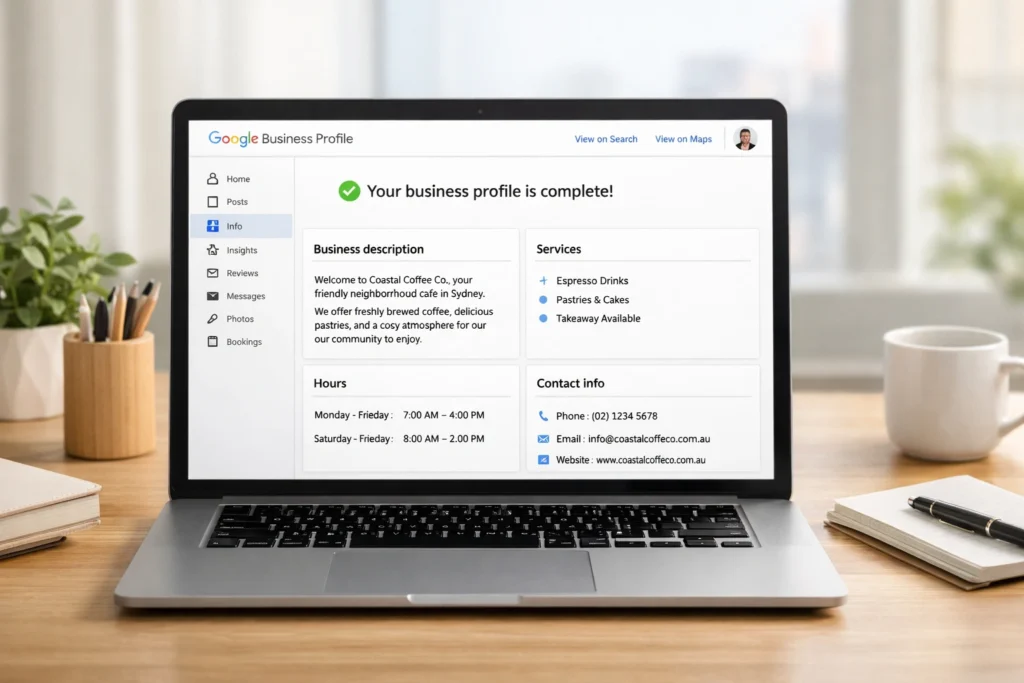
Your Google Business Profile (GBP) is the anchor for local visibility. Treat it like a live storefront.
Checklist:
- Ownership: Claim and verify your GBP using a work email tied to your domain.
- Categories: Pick one primary category that matches your core service; add up to nine relevant secondary categories that describe real services you offer.
- Name: Use your registered trading name only; no keyword stuffing.
- Address and service area: For storefronts, show your address. For service-area businesses, hide the address and set service suburbs or regions.
- Hours: Set accurate hours, including public holiday hours in Australia.
- Phone and website: Use a local phone number. Point the website field to your most relevant local landing page.
- Business description: Plain English summary with services, suburbs, and what makes you trustworthy; avoid sales puffery.
- Services and products: Add your real services with short descriptions and pricing ranges only if you actually publish them.
- Photos and video: Upload clear storefront, team, and work-in-progress shots. Add short clips of your space or process.
- Posts: Publish weekly updates: offers, events, seasonal tips, or new work.
- Messaging: Enable if you can respond quickly Mon to Fri.
- Q&A: Seed common questions and answer them helpfully.
- Attributes: Add accessibility, amenities, and payment methods that apply in Australia.
Extend to core listings:
- Apple Business Connect for Apple Maps.
- Bing Places.
- Facebook Page details aligned with GBP.
- ABN details visible and consistent where appropriate.
On-site essentials for local intent
Your site should confirm you serve the visitor’s area and solve their job-to-be-done. Start with a clean, fast page for each key service and location you truly cover.
Must-haves on key pages:
- Clear H1 with service and area phrased naturally.
- First paragraph that states what you do, the suburbs you cover, and typical response times if relevant.
- Click-to-call buttons and a short form above the fold.
- Embedded Google Map for storefronts; simple service area list if you travel.
- Real photos of your work or premises.
- Reviews pulled through as text snippets with the reviewer’s first name and suburb when allowed.
Schema and technical:
- LocalBusiness schema with your legal name, ABN, phone, and opening hours.
- Service schema on service pages where appropriate.
- Fast load times on mobile; compress images; avoid heavy pop-ups.
- HTTPS across the site; a visible privacy policy and contact page.
- Internal links: from blogs to service pages and suburb pages with natural anchor text.
Content that earns local visibility
Local content should answer the exact questions people ask before they call or visit.
Ideas that work:
- Suburb guides tied to your service: parking, access, council rules, or local considerations a customer would face.
- Before-and-after galleries tagged by suburb and service type.
- Short case notes: the problem, what you did, and the outcome; keep it factual.
- Seasonal content: storm season prep in QLD, bushfire-safe maintenance where relevant, EOFY services where it fits.
- FAQs rewritten as standalone, indexable posts if they are substantial.
Formatting tips:
- Keep paragraphs short; add bullet lists for scannability.
- Use Australian spelling and references.
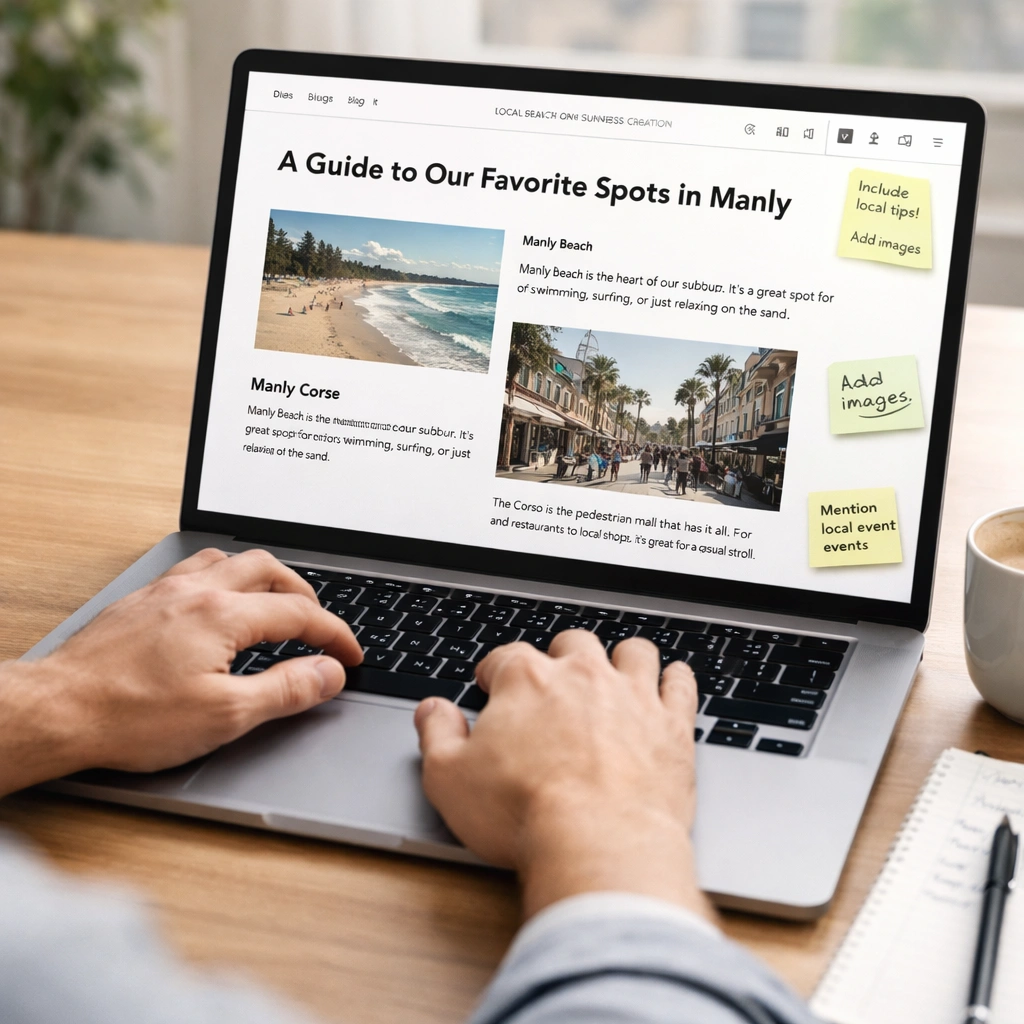
- Include a clear CTA at the end of each piece that routes to the relevant service or booking page.
Distribution:
- Share posts to your GBP via Updates.
- Cross-post to Facebook and LinkedIn with a local angle and a single measured CTA.
Reviews, ratings, and reputation management
Reviews shape click-through rate and rankings. Make asking for them part of your delivery process.
System to follow:
- Request timing: Ask right after a successful job or visit.
- Shortlink: Use your GBP review link; include it on invoices and follow-up emails.
- Prompt: Ask for specifics like suburb, service, and outcome; never script words.
- Responses: Reply to every review. Thank positive reviewers; address issues calmly with a solution path.
- Policy: Never incentivise reviews with gifts or discounts; it breaches platform rules.
What to measure:
- Volume month by month.
- Average rating trend.
- Review keywords that match your services and suburbs.
Citations, directories, and NAP consistency
Citations are mentions of your Name, Address, and Phone. Consistency helps Google verify your business details.
Steps:
- Standardise your name, address, phone, and hours; use the exact same formatting everywhere.
- Fix duplicates and old addresses.
- Submit to reputable Australian directories: ABN/ASIC entries, Yellow Pages, True Local, Hotfrog, Yelp, Facebook, Apple Maps, Bing, and relevant industry bodies.
- Track a master sheet of every listing: URL, login, status, and date updated.
What to avoid:
- Bulk low-quality directories.
- Keyword-stuffed names; this can trigger suspensions.
Technical and UX checks that impact local rankings
Technical friction kills enquiries even if rankings are sound.
Quick audit:
- Mobile usability: tap targets, font sizes, and forms that work on a small screen.
- Page speed: compress images; lazy-load galleries; cache static assets.
- Core Web Vitals: aim for stable layouts and quick first interaction.
- Accessibility: alt text on images; colour contrast; keyboard-friendly forms.
- Navigation: a clear Services menu, suburb pages grouped logically, and a Contact page with your NAP details and ABN.
Security and data:
- SSL certificate valid.
- Daily or weekly backups.
- Spam controls on forms with minimal friction.
Tracking, KPIs, and simple reporting
What you measure shapes what you fix. Keep it simple and tied to revenue.
Set up:
- Google Analytics 4 with conversion events for calls, form submissions, and bookings.
- Call tracking with a local pool if you run ads; swap only in paid channels to keep NAP stable on your site and GBP.
- UTM tags on GBP links: website button, appointment link, and posts.
- Rank tracking for a small set of service plus suburb terms; avoid chasing vanity lists.
KPIs to watch monthly:
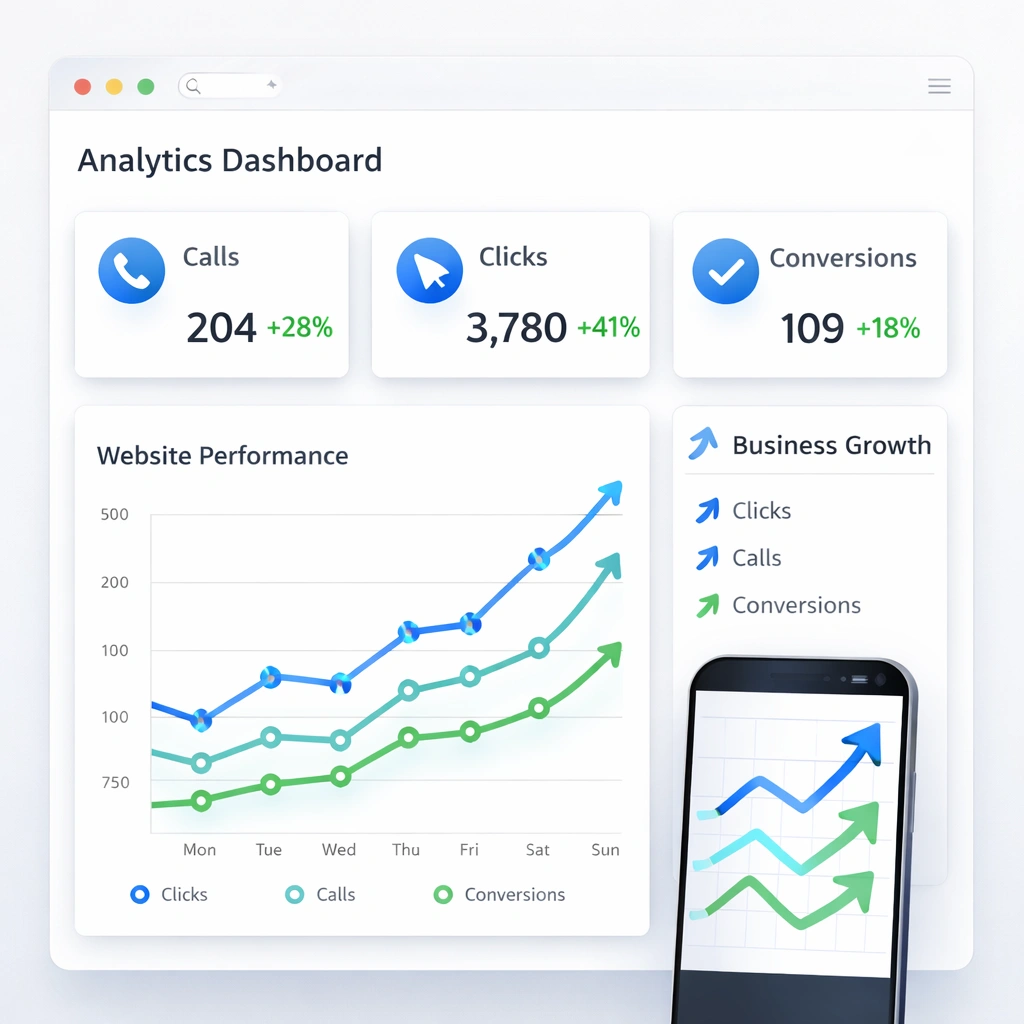
- GBP: calls, messages, website clicks, direction requests, and views by surface.
- Website: organic sessions from your target suburbs, conversions, and assisted conversions.
- Reviews: count, average rating, and response time.
- Revenue proxies: accepted quotes, bookings, or foot traffic trend if you track POS tags.
Common mistakes to avoid
- Stuffing keywords into your business name or titles; it can get you filtered or suspended.
- Publishing dozens of thin suburb pages with swapped place names; produce a smaller set of solid pages instead.
- Ignoring reviews; silence looks risky to customers.
- Letting hours, phone numbers, or addresses drift out of sync across platforms.
- Over-automating posts; GBP prefers helpful, fresh updates tied to real events or offers.
- Skipping site speed fixes while uploading massive image galleries.
- Treating local SEO like a one-off project; small, steady updates win.
Frequently Asked Questions
What is the 80/20 rule for SEO?
Focus on the few tasks that drive most local results: a complete Google Business Profile, consistent NAP, fast mobile pages, strong service pages, and steady reviews. Spend most of your time there; the long tail of tweaks comes after those pillars are solid.
How much does SEO cost in Australia?
Budgets vary by industry, location, and scope. Start by mapping the gap: your current visibility, competitors, and service areas. Then set a monthly budget you can sustain for six to twelve months. If you need a tailored Brisbane quote, ask for a quick audit first.
What is a local SEO checklist?
It’s a step-by-step plan that covers your Google Business Profile, on-site local pages, reviews, citations, technical health, and reporting. Work through each area, keep details consistent, and update monthly so signals stay fresh.
Does local SEO still work?
Yes. People still search on Maps and click organic results before they call or visit. The playbook has matured: accurate data, useful content, fast mobile pages, and real customer reviews continue to drive calls and foot traffic.
Is SEO dead in 2026? No, just tweak your strategy for AI
SEO isn’t dead; formats changed. Helpful pages, accurate data, and real-world trust now feed both classic search and AI answers. Keep your GBP, site content, and reviews tight so you’re the obvious choice when customers compare.
What is local SEO?
Local SEO helps your business show for area-based searches on Google Maps and in organic results. It blends a completed Google Business Profile, suburb-focused content, reviews, citations, and a fast, trustworthy website.
How to action this in 30 days
Week 1:
- Claim and verify GBP; set categories, hours, services, and photos.
- Standardise NAP; fix your top five listings.
Week 2:
- Build or improve two core service pages and one suburb page.
- Add LocalBusiness schema; improve mobile speed.
Week 3:
- Start a review request process and reply to every existing review.
- Publish one local blog post and one GBP Update.
Week 4:
- Set up GA4 events and UTM on GBP links.
- Record a baseline report; note calls, website clicks, and enquiries.
Conclusion
Local SEO is repeatable when you work a simple plan: complete your Google Business Profile, build strong service and suburb pages, keep your NAP consistent, earn reviews, and measure calls and enquiries. Need help implementing this checklist? Explore our local SEO services at https://firstrank.com.au/services.